How to read a Loan Estimate
The Loan Estimate is the three page pricing document your lender must send you within three business days of your application. It says "Loan Estimate" at the top left of page 1. Page 1 carries your terms, page 2 carries every fee, and page 3 carries the comparison numbers most people skip and should not.
First, make sure it is the right document
The Loan Estimate is not the Closing Disclosure. The Closing Disclosure is five pages and arrives near closing, when most numbers are already settled. It is also not a pre-qualification letter or a rate quote sheet, which carry no obligation at all. If your document is three pages and titled "Loan Estimate," you are in the right place. This is the best moment in the whole process to check your pricing, because nothing is locked in yet except the lender's side of the offer.
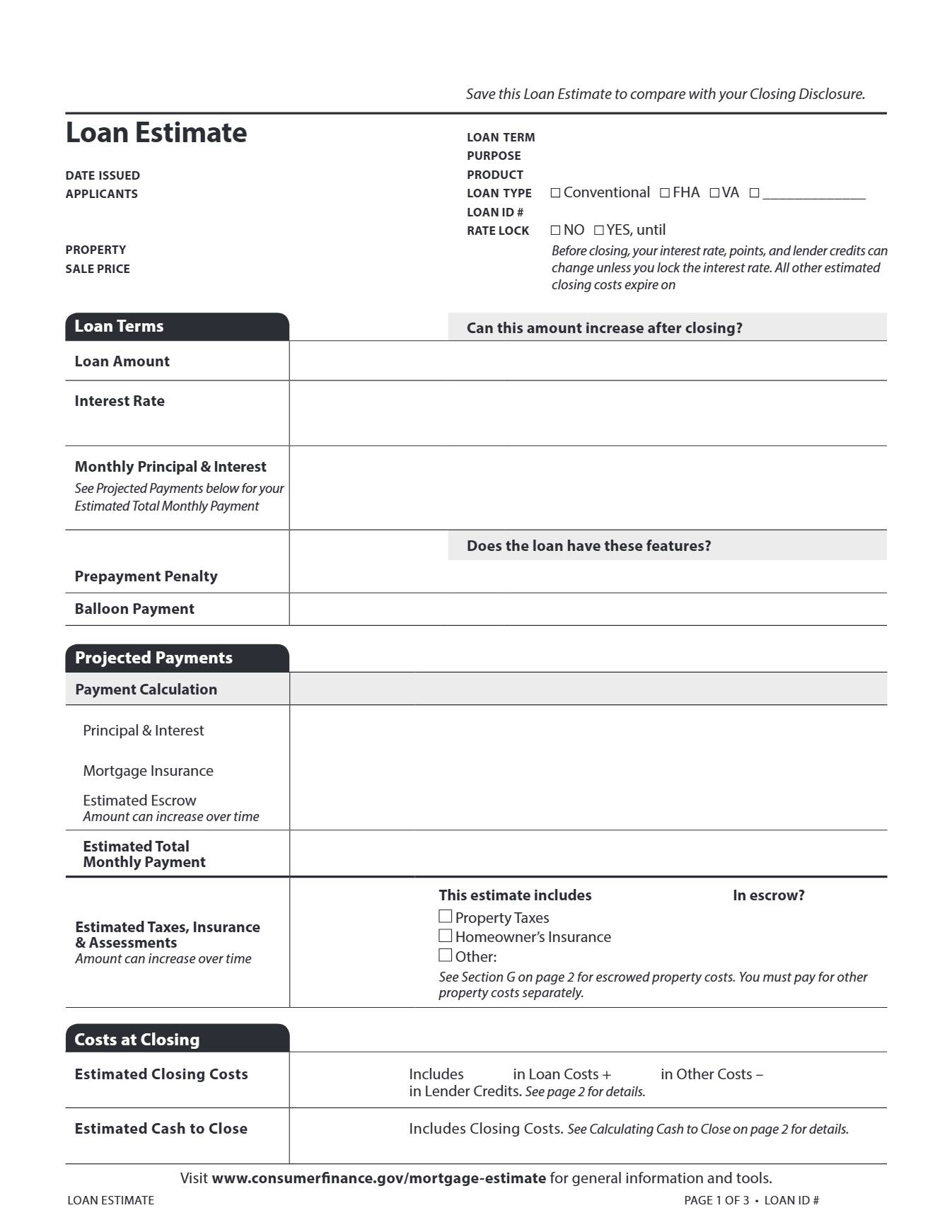
- 1Title, top left of page 1: it says "Loan Estimate".
- 2Date Issued, directly under the title.
- 3Rate Lock, last row of the facts block on the right.
- 4Costs at Closing, the summary box at the bottom.
Page 1: your terms and the Rate Lock box
Page 1 shows the loan amount, rate, monthly payment, and closing cost totals. Look for the Rate Lock box near the top of page 1. If it says YES, your pricing is already set, and the fair comparison is the market on the day your Loan Estimate was issued. The date printed in that box is when the lock runs out, not the day you were priced. If it says NO, your estimate can still change, and the comparison is today's market instead. Either way, the estimated closing costs on this page are the headline, and page 2 is where you find out what they are made of.
Page 2: where the money is
Page 2 itemizes everything:
- Section A, Origination Charges: the lender's own fees, before points and credits. Origination fee, underwriting, processing, and any discount points. This section is the purest read on what the lender charges to be your lender, and it is the section most worth comparing.
- Section B, Services You Cannot Shop For: the lender picked these providers. You pay, but you do not choose.
- Section C, Services You Can Shop For: title work and similar. You are allowed to find your own providers here, and it can be worth doing.
- Section E, government recording fees and transfer taxes, is set by law. Sections F and G are prepaid interest, insurance, and your initial escrow deposit. That is your own money moving into an account that stays yours. Section H is called Other, and it is worth reading, because owner's title insurance usually lives there. That one is optional and it protects you rather than the lender. Section D is just the total of A, B, and C.
- Section J: the total. Useful, but totals hide detail. The story is in A.
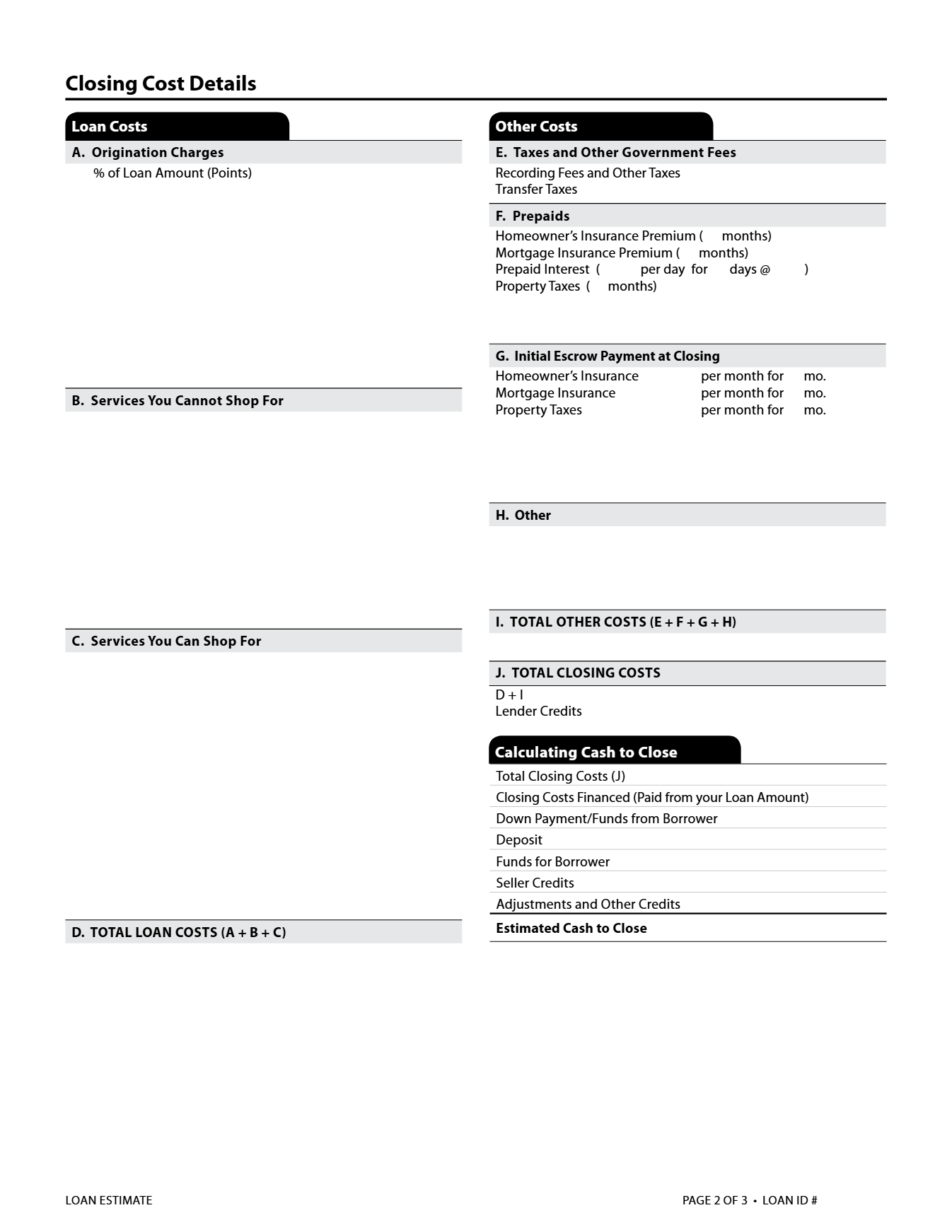
- 1Section A, Origination Charges. The lender's own fees. Start here.
- 2Section B, Services You Cannot Shop For. Your lender picks these providers.
- 3Section C, Services You Can Shop For. You can shop these.
- 4Section J, Total Closing Costs. Everything above added together.
What do mortgage fee names actually mean?
The form is identical at every lender. That is the point, it was designed so you can compare offers line by line. What changes is the numbers, and what each lender names its fees. Here are the names you will see for the same handful of things.
| What your lender might call it | What it actually is |
|---|---|
| Origination fee, loan origination charge, lender fee | The lender's base charge for making your loan. Section A. |
| Underwriting fee, processing fee, application fee, administration fee, verification fee | The lender's own internal costs, charged to you. Section A, and the most worth questioning. |
| Discount points, points, buydown | Money paid up front to lower your interest rate. Section A. |
| Lender credit, rebate, negative points | Money the lender puts toward your costs, usually in exchange for a higher rate. |
| Rate lock fee, extension fee | A charge to hold your pricing for a set number of days. |
| Lender's title insurance, title services | Covers the lender's interest only. Owner's coverage is the one that protects you. Section B or C depending on who picked the provider. |
| Appraisal fee, property valuation | Paying a licensed appraiser to value the home. Section B. |
| Commitment fee, lock-in fee | A lender charge for reserving your rate. Part of Section A. |
| Document preparation fee, doc prep | A lender charge for assembling your closing paperwork. Part of Section A. |
| Tax service fee, tax certification | Pays a vendor to confirm your property taxes get paid. Usually Section B. |
If a fee on your estimate is not on this list, that is fine. Your report names every line item it finds, and grades your Section A total and your rate.
Page 3: the numbers built for comparison
Page 3 exists so you can compare offers: the APR, the Total Interest Percentage, and the "In 5 Years" figure showing what you will have paid five years in. If you are choosing between two lenders, put their page 3 numbers side by side. Same loan amount, same day, same program, or the comparison is not fair.
What to do with what you find
Reading the document tells you what you are being charged. It cannot tell you whether those charges are in line with what lenders actually charged other borrowers like you. That takes data: daily rate indices and public loan cost records. AI reads every line, explains what each one is, and grades your Section A total and your rate against public loan data. Or start with the sample report to see what a graded Loan Estimate looks like.
You do not have your Loan Estimate yet
Your lender has to send one within three business days of a completed application. An application is six pieces of information: your name, your income, your Social Security number, the property address, an estimated property value, and the loan amount you want. Once you have given a lender those six things, the clock starts. If you have applied and have not received it, ask for it directly.